Cart
0
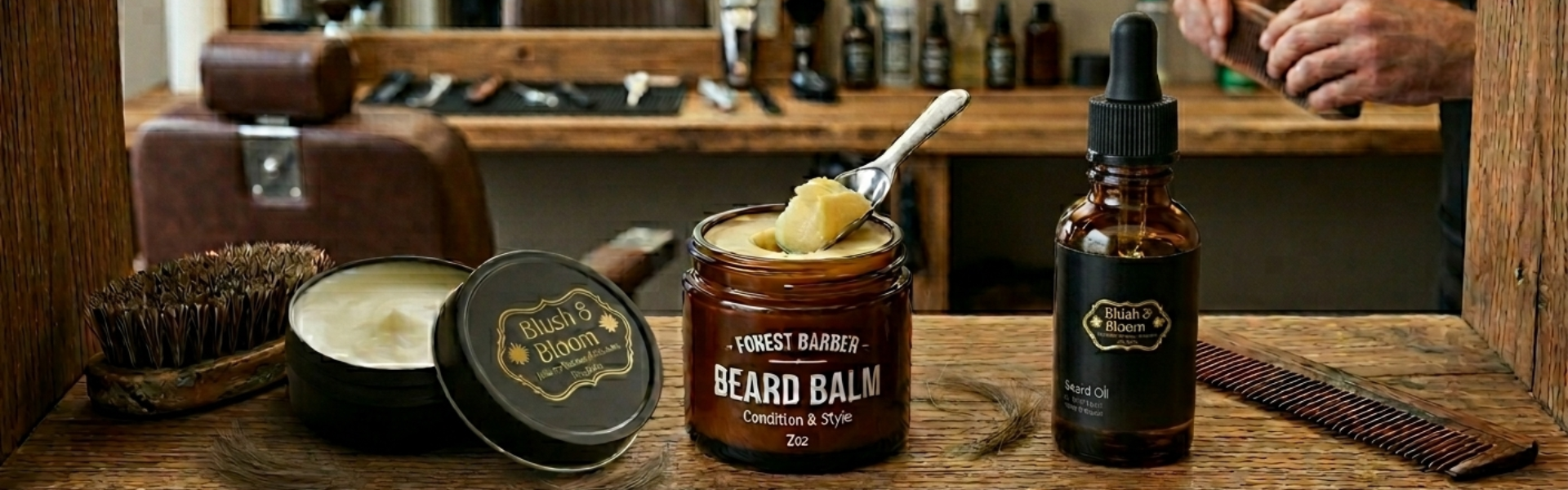
If you’ve decided to grow out your facial hair, you’ve likely realized one thing very quickly: a great beard doesn’t just happen. It requires maintenance. But walking into the grooming aisle can feel like entering a lab. You’re faced with oils, balms, and butters, all claiming to be the "secret" to a well groomed beard.
Which one do you actually need? Are they interchangeable? To help you stop the guesswork, let’s break down the science of beard care and find the perfect match for your face.
1. Beard Oil: The Foundation (For The Skin)

Think of beard oil as a supplement for your skin. Most beard issues, like the dreaded "beardruff" (dandruff) and itchiness, start because the skin underneath your hair is dehydrated.
▪ The Science: Your face produces a natural oil called sebum. However, as your beard grows longer, your skin can't produce enough sebum to coat the entire hair shaft. This leads to dry, brittle hair and flaky skin.
▪ The Ingredients: High-quality oils use "carrier oils" like jojoba or argan oil. A study in the Journal of Cosmetic Dermatology notes that jojoba oil is chemically similar to human sebum, making it highly effective at penetrating the skin barrier without clogging pores.
▪ Best For: Short beards, stubble, and anyone suffering from itchy skin.
2. Beard Balm: How It Shapes And Control Your Beard?
 Beard balm is essentially a leave-in conditioner that provides "hold." If your beard looks like a bird's nest the moment you step outside, balm is your best friend.
▪ The Science: Balms contain beeswax or lanolin. These ingredients act as "occlusives," meaning they create a physical barrier on the hair. According to the British Journal of Dermatology, occlusives are essential for preventing trans-epidermal water loss (TEWL). By sealing moisture into the hair cuticle, the balm makes the hair heavier and easier to pull into a specific shape.
▪ The Ingredients: Look for Shea butter and beeswax. The tack required to tuck in those wayward “flyaway” hairs is provided by the wax.
▪ Perfect For: Medium to long beards that need to be styled and protected from environmental damage.
3. Beard Butter: The Middle Ground (For Beard Softness)
Beard butter is the great option. Because of its creamy whipped nature, it is the perfect combination of an oil and a balm.
▪ The Science: Unlike balm, butter contains little or no beeswax. Instead, it has a lot of Butyrospermum Parkii (shea butter) and cocoa butter. Shea butter is strong, and triterpenes, which supports collagen and have potent anti-inflammatory properties, according to the research published in the International Journal of Molecular sciences.
▪ The Ingredients: Mostly natural butters and essential oils. It absorbs into the hair more deeply than balm but offers more "body" than oil.
▪ Best For: Men who want an incredibly soft, touchable beard without the stiff hold of a wax. It’s also the perfect "nighttime" treatment.
References
-
Journal of Cosmetic Dermatology: Jojoba oil’s similarity to human sebum.
-
British Journal of Dermatology: The role of occlusives in hair and skin hydration.
-
International Journal of Molecular Sciences: Anti-inflammatory and skin-healing properties of shea butter.
Final Thoughts
You don’t necessarily have to choose just one. Many men with long beards use oil in the morning to hydrate the skin, followed by a balm to shape the hair for the day. At night, they’ll apply butter to deep-condition the hair while they sleep.
Always apply these products to a slightly damp beard. Water helps the oils and butters emulsify, allowing them to spread more evenly through the dense hair follicles.
Ready to upgrade your grooming game? Start with an oil if you’re itchy, a balm if you’re messy, and a butter if you want that premium, soft-to-the-touch feel. Your beard (and anyone who gets close to it) will thank you.