Cart
0
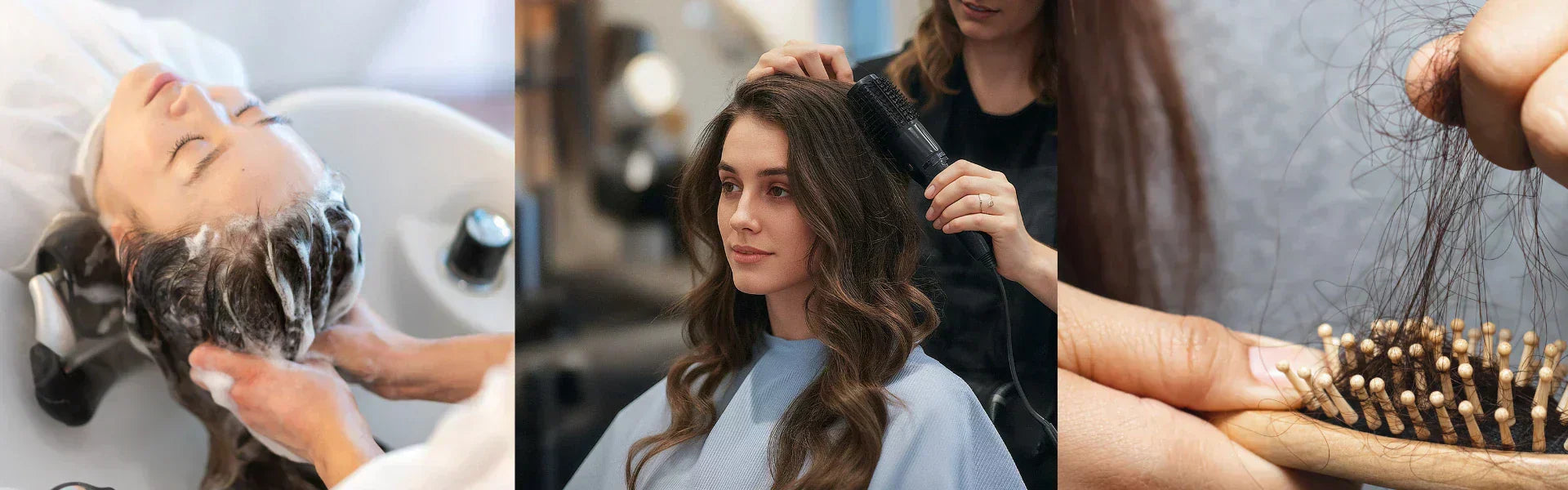
Collagen and strong hairs are typically regarded as being “born with.” While heredity undoubtedly plays a part, modern medical research reveals that our everyday hair care routine functions like a volume knob, which gradually increases or decreases the shine of our hairs.
To understand how this works, you have to look at collagen. Think of it as the "biological foundation" of your body. It’s the scaffolding that keeps your skin firm and provides a solid home for your hair follicles.
When that scaffolding is strong, your hair feels resilient and your skin looks agile. The problem is that your lifestyle stores are continually either strengthening or weakening the hair structure.
Let’s explore the practical science of how your daily routine shapes your inner beauty in this blog.
The Science: Collagen and the Hair Connection
It is a common mistake to think collagen is only about preventing wrinkles. In reality, it is a vital building block for your hair, too. Collagen is packed with specific amino acids, like proline, which your body desperately needs to produce keratin, the actual protein that makes up every single strand on your head.
Consider your hair as a plant and your scalp as the soil. Clinical research, including studies featured in Dermatology Practical & Conceptual, shows that as we get older, the collagen in our dermis (the deep layer where hair roots live) starts to thin out.
When that "soil" loses its density and support, the hair follicles essentially lose their anchor. The result? You start noticing more thinning, less volume, and hair that snaps much easier than it used to.
1. The "Sugar Sag": How Diet Impacts Proteins
One of the biggest threats to your daily lifestyle is the creation of a biological process called glycation. In essence, excessive use of refined carbohydrates causes those sugar molecules to get linked to rising levels of vital substances such as your collagen and elastin fibers, which function as biological superglue.
▪ The outcome: It creates what scientists aptly call AGEs (advanced glycation end-products). These AGEs turn your once-bouncy collagen fibers brittle, stiff, and prone to snapping.
▪ Medical insights: From a medical standpoint, this is bad news for your hair. If the collagen surrounding your hair bulb is crusty and weak instead of flexible, it simply can’t provide the support your hair needs to grow thick and strong. It’s like trying to grow a tree in dry, cracked clay.
2. The Stress Factor and Cortisol
We often talk about stress as a mental weight, but your body treats it like a physical emergency. In the world of biology, chronic stress is essentially reducing the collagen. The moment you're overwhelmed, your system pumps out cortisol, the primary stress hormone.
▪ Here is what’s happening under the surface: Elevated cortisol levels act like a depleting agent that influences the inflammatory and catabolic pathways and proteoglycans that keep your skin plump and your scalp healthy.
▪ Impact on Hair: Stress can cause hair follicles to enter a resting phase, a condition known as telogen effluvium, which makes hair loss more likely. These hormone levels can be controlled using adaptogens like ashwagandha or engaging in a mindful exercise.
3. UV Exposure and "Photo-Aging"
Most people realize that the sun is responsible for fine lines and wrinkles, but we rarely stop to think about what it’s doing to our hair. The truth is, your scalp is just as vulnerable as your face.
When UV rays hit your head, they trigger the production of "free radicals," unstable molecules going to war with the collagen tucked away in your scalp.
▪ Here’s the breakdown: UV radiation is powerful enough to dive deep into the dermis, where it shatters collagen fibers at a much faster rate than natural aging ever would. It’s essentially a fast-forward button for skin damage.
Strong foundation: To keep your hair’s foundation strong, you’ve got to play defense. Something as simple as throwing on a hat when you're outside or using hair treatments infused with vitamin E can make a world of difference. Since Vitamin E is a heavyweight antioxidant, it acts like a shield, soaking up that environmental stress before it has a chance to wreck your scalp’s collagen supply.
4. Sleep: The Body’s Repair Shop
We have all heard the expression “beauty sleep,” but it is actually a biological requirement rather than merely a slogan. Sleep is the only time your body truly clocks in to do the heavy lifting.
When you’re in a deep slumber, your brain signals the release of growth hormones, which act like a construction crew to ramp up collagen production and refresh your cells.
▪ Few benefits: If you skimp on rest, you’re essentially forcing your body to skip its maintenance shift. This lack of sleep spikes your oxidative stress levels and leaves your system unable to patch up the "wear and tear" from the day.
▪ The real takeaway: Getting those 7 to 9 hours isn't a luxury; it's a non-negotiable requirement if you want to keep your hair thick and your skin elastic. Without it, you're basically fighting an uphill battle against aging, no matter how many serums you use.
Final Thoughts
When it comes down to it, the state of your hair and skin is really just a visible reflection of what’s going on inside your body. We might not be able to stop the clock entirely, but we have a huge say in how we age by sticking to habits that actually feed our collagen levels rather than draining them.
We are essentially providing our bodies with the “raw materials” required to maintain strong hair and radiant skin by reducing the amount of sugar we consume, managing stress better, and replenishing our bodies with the proper nutrients.
It’s not about perfection; it's about making those small, intentional choices that help you stay vibrant for the long haul.