Cart
0
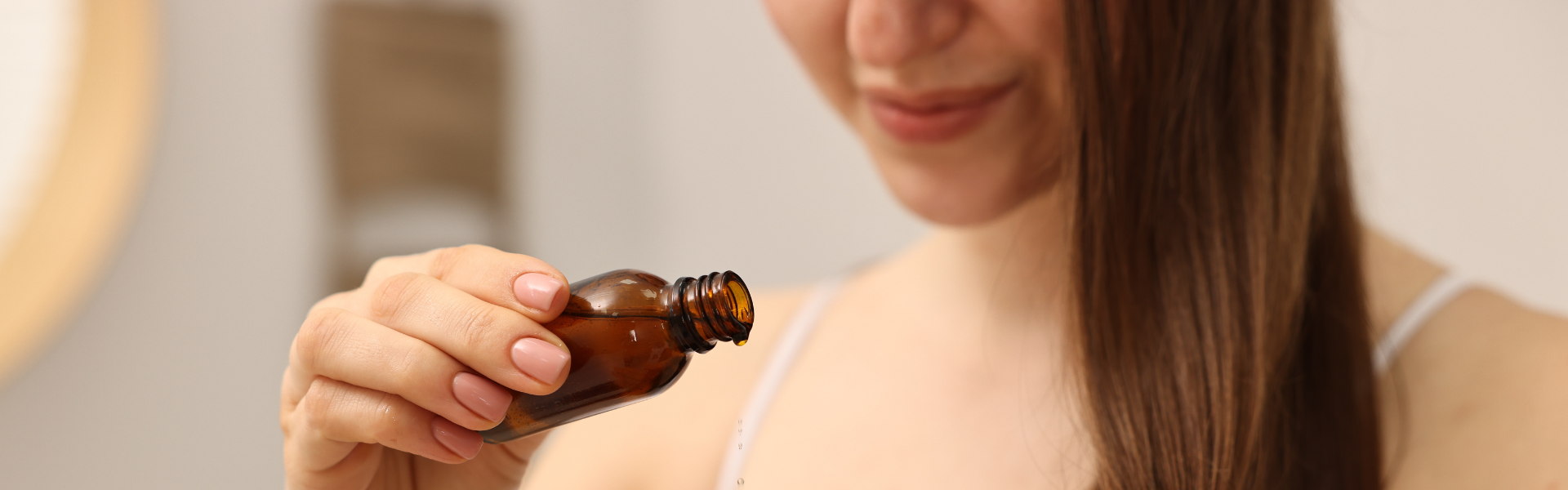
Breakage, frizz, dullness, and split ends damaged hair has a way of making itself very obvious. But before you reach for a salon treatment, there's something sitting in nature's pantry that scientists keep coming back to.
"Hair oil doesn't just coat the strand; the right oils penetrate into the cortex itself, filling structural gaps that heat and chemicals leave behind."
If you've ever wondered why hair oil keeps showing up in dermatology research, it comes down to one thing: hair is surprisingly vulnerable, and natural oils interact with its structure in ways synthetic products often can't replicate.
Why Does Hair Get Damaged In The First Place?
Each strand of hair is made up of a protein called keratin, wrapped in a protective outer layer called the cuticle, a series of overlapping, scale-like cells. When that cuticle is intact, hair looks shiny, feels smooth, and holds onto moisture well. When it's damaged, those scales lift or break, and everything starts falling apart.
▪ Heat styling
Repeated high heat (above 180°C) degrades keratin proteins and lifts the cuticle.
▪ Chemical treatments
Disulfide linkages in the hair shaft are broken by bleach and relaxers, damaging the core of the hair.
▪ UV exposure
Melanin is oxidized by the sunlight, which also breaks down the cuticle’s protective lipid layer.
▪ Overwashing
Strips the scalp's natural sebum, leaving hair porous and prone to breakage.
How Does Hair Oil Actually Repair? The Science
Here's what makes natural oils genuinely useful rather than just cosmetically pleasing: certain oils are small enough in molecular size to penetrate past the cuticle and into the cortex, the inner structure of the hair. This is called substantivity, and not all oils have it.
▪ Research finding
A landmark study in the Journal of Cosmetic Science (2003) demonstrated that coconut oil, due to its high lauric acid content and low molecular weight, was the only common oil able to significantly reduce protein loss in both undamaged and damaged hair when used as a pre-wash or post-wash treatment (Rele & Mohile, 2003).
For oils that can't penetrate as deeply, they still serve a valuable function: forming a protective film around the cuticle to seal moisture in, reduce friction, and prevent further damage during combing and styling.
▪ Clinical evidence
According to the research published in Skin Pharmacology and Physiology (2015), after repeated application over a four-week period, argan oil rich in tocopherols (vitamin E) and oleic acid greatly increased hair elasticity and decreased breakage by reestablishing the lipid layer of the hair (Boucetta et al., 2015).
The most effective natural hair oils, ranked by function.
According to the 2021 review published in Dermatology and Therapy, the quality of the hair shaft is directly related to the health of the scalp. Oils with antimicrobial and anti-inflammatory qualities, such as castor and tea tree oil, help preserve the follicular environment required for healthier, stronger hair growth (Gavazzoni Dias, 2021).
How to use hair oil for the best results?
Apply a small amount (2–4 drops for fine hair, up to 8 for thick or coarse hair) to your palms and work through mid-lengths to ends first, never roots, unless treating the scalp specifically.
For deep repair, use coconut oil as a pre-wash treatment, apply 30 minutes before shampooing. This allows penetration into the cortex before water swells the hair shaft.
For daily protection, a few drops of argan or rosehip oil on damp hair after washing creates a moisture-sealing barrier before heat styling.
Be consistent. Hair repair is gradual; the cuticle doesn't restore overnight. Most clinical studies showing meaningful improvement used oils daily or several times per week over 4–8 weeks.
Less is more with hair oil. Over-application doesn't speed up repair; it weighs hair down and can clog follicles over time. Start with 2-3 drops and then adjust according to how your hair reacts.
Bottom line
Moisturizing hair oils are supported by actual structural research and are not merely a fad. When used properly and consistently, the proper oil can increase elasticity, prevent additional damage, restore the lipid barrier of the hair, and lessen protein loss. While rosehip and argan oil are great for everyday protection and surface healing, coconut oil is better for deep repair.
Treating hair oil is a routine, rather than a one-time solution, for optimal results. A dermatologist should always be consulted if you have severe hair loss, considerable breakage, or inflammation of the scalp. While it can supplement expert care, a hair oil routine can not replace it.