Cart
0
Our skin is frequently the first to suffer when winter’s cold hugs tighten. Hands, elbows, and faces become chapped, rough, and occasionally painful as a result of the harsh, cold, and dry air’s aggressive removal of moisture. Many of us turn to heavy-duty barrier creams when conventional lotions don’t work.
Traditional petroleum jelly and the reviving favorite, tallow cream, are two of the best options for winter skin protection.
Although both claim to protect your skin from the elements, their methods of action are essentially different. The best option will vary depending upon whether you want to profoundly nourish or repair your skin or just create a barrier from the wind.
The Problem: The Skin Barrier Is Attacked By The Winter We must first comprehend the skin barrier (the stratum corneum) in order to determine which product succeeds. Your skin is the brick in the barrier, and lipids, natural fats, and oils are the mortars that hold them together. This portal is crucial because it keeps environmental irritants and hydration in. Because of this extremely low humidity in the chilly air, winter is harsh.
As a result, your skin barrier literally loses moisture due to a powerful osmotic pull. The mortal gets cracks in the wind when your natural lipids are getting depleted. This makes you vulnerable to irritation and excessive dryness and permits moisture to escape quickly (known as Transepidermal Water Loss, or TEWL).
One of the best occlusive agents is petroleum jelly. Clinical research shows that petrolatum can reduce transepidermal water loss (TEWL) by up to 30–50%, helping restore the skin barrier in compromised skin conditions.”
Petroleum Jelly: The Ultimate Shield
For generations, petroleum jelly, often known as petroleum, has been the go-to wintertime remedy; it forms an important barrier.
Petroleum jelly is considered an occlusive in medicine. In the sense of increasing hydration, it doesn’t “moisturize” the skin. Rather, it forms a hydrophobic layer on top of the epidermal barrier, trapping moisture beneath.
Tallow Cream: the Intimate Nutrient
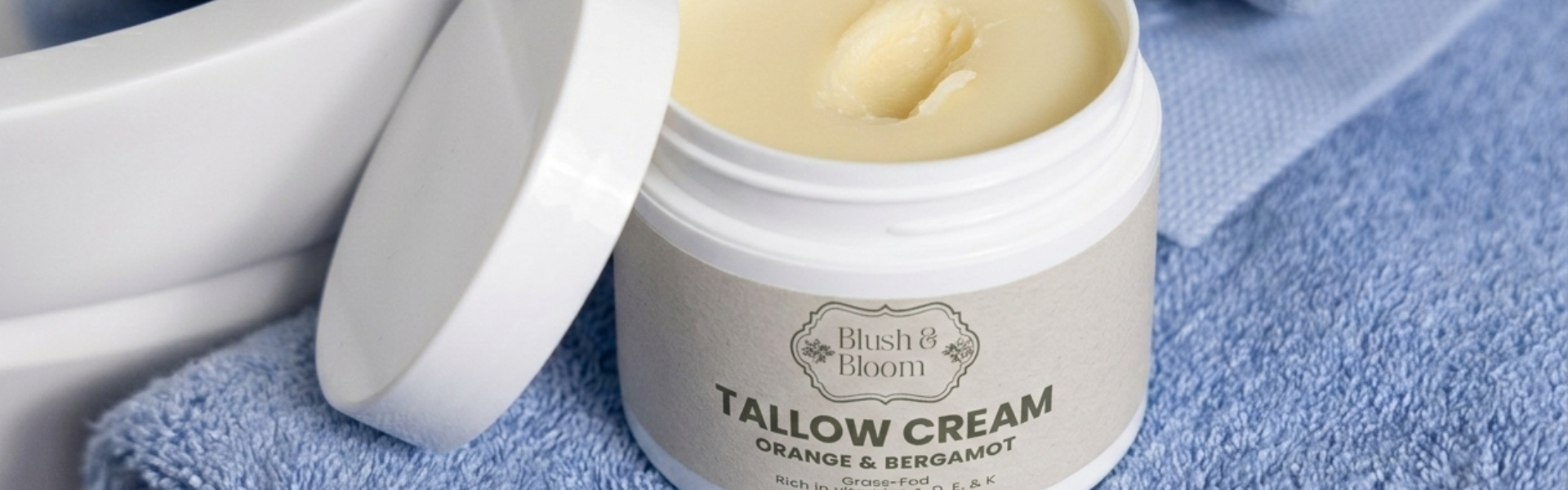
Instead of only creating a barrier, tallow cream, which is made from rendering animal fat (often cattle raised on grass), repairs the skin barrier.
The stratum corneum functions as a “brick-and-mortar” structure, where corneocytes (bricks) are held together by intercellular lipids (mortar), essential for maintaining hydration and protection.
The Verdict: How Should You Pick Your Skin

Which one would you pick for the dead of winter? Select petroleum jelly if
When engaging in serious outdoor activities, you are actively avoiding severe windburn or frostbite.
Your skin is extremely sensitive and reacts to most fats, whether they come from plants or animals.
Opt for petroleum jelly if:
▪ If you are actively working to avoid severe frostbite or windburn while engaging in hard outdoor activities.
▪ A completely watertight shield is required for an open, raw crack such as one on your knuckles.
▪ Your skin is extremely sensitive and reacts to most lipids from plants or animals.
Select Tallow Cream:
▪ Emollients with lipid-rich ingredients assist in restoring skin barrier flexibility and replenishing surface lipids if you need deep, long-lasting moisture (emollient) when your hair is often dry, flaky, or tight.
▪ You want to do more than merely protect your skin barrier; you want to strengthen and restore it.
▪ You would rather use natural, vitamin-rich goods made with just one ingredient than the petroleum-based ones.
In areas where petroleum jelly might be too oily, such as the arms and legs, you are treating broad dryness.
Because it preserves the skin's natural health, each has a role depending upon the skin needs daily winter maintenance and repair. However, keep a jar of petroleum jelly if you are subject to severe exposure.
Conclusion
Ultimately, the choice between tallow and petroleum jelly comes down to repair versus protection. If you are heading into a blizzard and need an unbreakable physical shield to stop windburn in its tracks, petroleum jelly is a medical-grade powerhouse that won't let you down.
However, if your goal is to actually heal dry, flaky skin and restore its natural suppleness, while petroleum jelly excels at forming an occlusive barrier supported by dermatology research, lipid-rich emollients such as tallow-based creams may offer additional skin-softening benefits depending on individual skin type and tolerance. For a glow that lasts until spring, focus on nourishing the barrier, not just covering it up.